How Telehealth Leaders Can Improve Patient Retention and Reduce No-Shows Using Data
Learn how to improve patient retention in telehealth using data and catch patient disengagement before it becomes lost revenue.
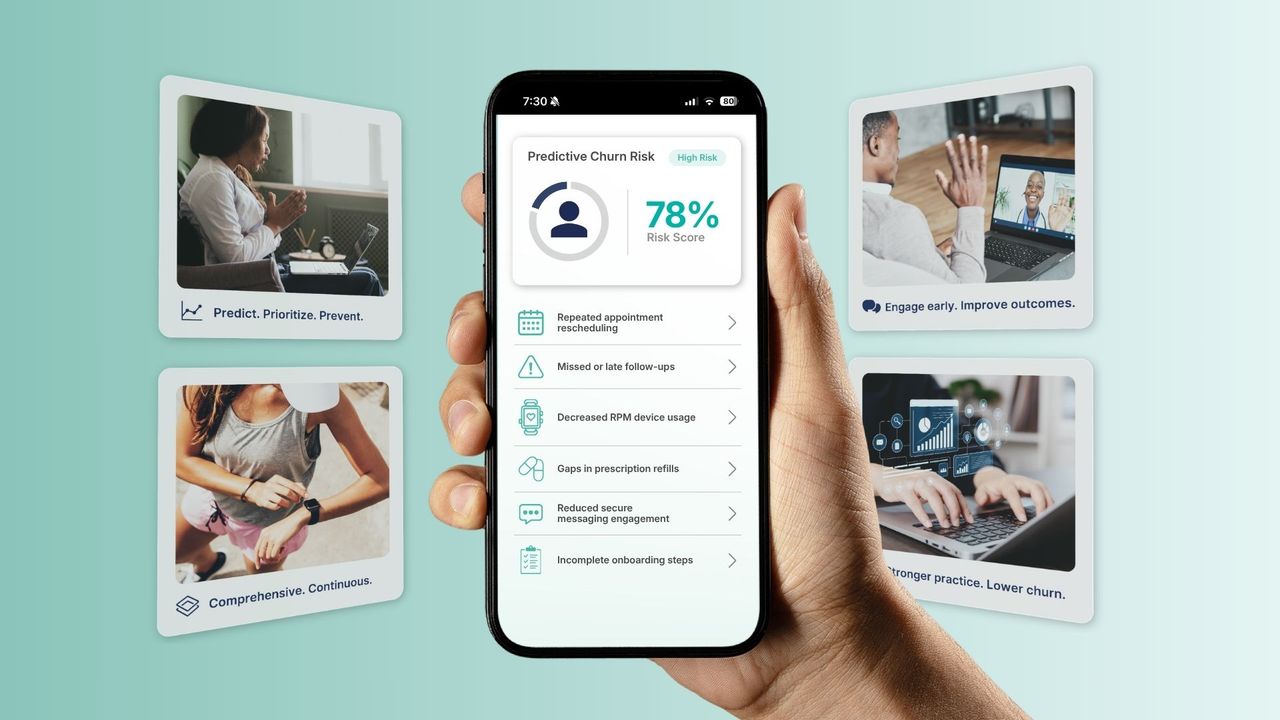
You've worked hard to acquire your patients. You've built the programs, run the campaigns, and earned the trust. But if those patients aren't coming back for follow-ups, refilling prescriptions, and progressing through care, you're leaving serious revenue on the table.
Acquiring a new patient can run five to seven times more than keeping an existing one.A 2% increase in patient retention has the same financial effect as cutting operating costs by 10%.
The telehealth organizations improving margins right now aren't doing it by acquiring more patients. They're doing it by investing more in the ones they already have.
Why Retention Matters More Than Ever in Telehealth
Telehealth Economics Make Retention More Valuable
Every new patient costs money to acquire through marketing, sales, and operations. That cost is often referred to as patient acquisition cost, or customer acquisition cost (CAC).
Telehealth is getting more competitive. CAC is rising — more players, more noise, and more spend are required to reach and convert a patient. Investing in the patients you've already converted is one of the most direct ways to improve your margins.
The organizations that win long-term maximize the value of every patient they earn, not just the ones that spend the most to acquire new ones.
Churn Quietly Erodes Telehealth Performance
Top-of-funnel growth can be misleading. A steady stream of new patients may signal momentum, but it doesn’t reflect the true health of the business.
In telehealth, what matters isn’t just how many patients you acquire,it’s how long they stay. If patients drop off after the first visit, early growth quickly loses its impact.
High acquisition with low retention creates a fragile model. Cash flow becomes unpredictable, and growth starts costing more than it should.
The real measure of performance is downstream: repeat visits, care plan progression, and sustained engagement. Without that, more patients in the door doesn’t translate into durable growth.
Why No-Shows Should Be Treated as a Retention Problem, Not a Scheduling Problem
Most organizations try to solve no-shows with emails and SMS. But the problem usually starts much earlier than that.
The No-Show Is a Symptom of Patient Drift
Most organizations treat no-shows as a scheduling problem. Send a better reminder. Tighten the confirmation flow. That's not wrong, but it's incomplete.
In telehealth, a no-show usually means something went wrong before the appointment day. Patients don't typically vanish without warning; they drift. Slowly, quietly, and usually before anyone notices.
Motivation faded after the first consult
Getting started felt like too much work, and they never fully committed
They didn't understand their next step in the care plan
They didn't feel enough progress to justify coming back
The no-show is visible. What causes it can be harder to spot and track.
The New Strategy: Spotting Patient Drift Before the Missed Visit
Catching patient drift early requires a different approach than most organizations take.
Move From No-Show Management to Churn Prediction
The old model: reduce no-shows with appointment reminders.
The new model: detect retention risk early and intervene before a drifting patient becomes a lost one.
The shift from managing no-shows to predicting churn isn't just operational. It changes how you think about patient engagement altogether.
Build a “Patient Drift Model”
What is a “patient drift model”? Patient drift is the growing distance between a patient and their next meaningful care action.
And, drift can be measured before it becomes a missed appointment.
Below are some engagement metrics that are indicators of patient drift.
Delayed intake completion
Repeated reschedules
Slower response to SMS or email
Low portal or app engagement between visits
Failure to complete pre-visit tasks
Drop-off after the first consult
Missed refill, follow-up, or care plan milestone
Long gaps between touchpoints
No single signal means a patient is lost. But patterns across multiple signals tell a clear story and give you time to act.
What Data Telehealth Leaders Should Use to Identify Retention Risk Early
Engagement Data
Message open and response rates
Onboarding completion rate
Portal or app activity between visits
Pre-visit form completion
Follow-up responsiveness
Access and Convenience Data
Time between scheduling and appointment
Provider availability and appointment fit
Reschedule frequency
Wait times for visits or follow-up care
Experience and Trust Data
First-visit experience feedback
Unanswered support questions
Patient confusion around next steps or care plan
Satisfaction signals post-visit
Care Progression Data
First-to-second visit conversion rate
Repeat visit rate
Follow-up completion
Refill continuity
Program completion rate
Reactivation after a lapse
Shifting from managing no-shows to predicting churn changes how you approach patient engagement at every level.
Why Telehealth Leaders Should Optimize for LTV, Not One-Off Utilization
Retention is one of the fastest ways to improve telehealth margins. That is why retention isn’t just a patient engagement metric. It is a growth lever.
A Booked First Visit Is Not Enough
A first visit is a starting point, not the value story.
What matters is what happens next. Do patients return for follow-up care? Stay engaged in treatment? Keep moving through the care journey?
If they don’t, the business loses more than a visit. It loses future revenue, weakens ROI on acquisition spend, and creates more pressure to refill the funnel.
LTV Is The Metric That Matters
Patient lifetime value (LTV), the total revenue a patient generates over the course of their relationship with your program, is the metric that actually reflects business health in telehealth.
LTV improves when patients:
Return for follow-up care
Complete longer treatment programs
Enroll in multiple programs
Adhere to care plans between visits
Reengage after a gap instead of churning for good
Churn Is The Enemy
Nobody wants churn, plain and simple. It’s expensive. Every patient who churns early:
Can potentially Inflate your effective CAC
Reduces revenue per acquired patient
Compresses margins
Disrupts forecasting
Forces more acquisition spend just to maintain current growth
Retention does the opposite. It can help stretch your acquisition dollars further, improves margins, and makes it easier to grow without constantly refilling the funnel.
What a Better Telehealth Retention Strategy Looks Like
Design for Retention, Not Isolated Visits
Retention starts at the beginning: program design. Care pathways with structured follow-up sequences, milestone check-ins, and proactive outreach between visits create natural touchpoints that keep patients engaged and give your team visibility into who's drifting.
Make Multi-Program Enrollment Easy
One of the biggest opportunities in telehealth is helping patients move into additional programs that fit their needs.
When a patient enrolls in more than one relevant program, lifetime value increases, and retention may improve with it. Why? Because the relationship gets deeper, the experience becomes more valuable, and the patient has more reasons to stay engaged over time.
That only works if cross-sells feel helpful, not forced. Make it easy for patients to understand what other support is available, why it matters, and how to take the next step without friction.
For leaders, this is a key question: are you treating each program like a separate transaction, or are you building a connected care journey around the patient?
Match Intervention to Reason for Disengagement
Not all churn risk looks the same. A patient who dropped off because of scheduling friction needs a different response than one who never understood their care plan. Segmenting by likely barriers, digital friction, perceived value, and affordability lets you intervene in ways that actually work.
Intervene Before Revenue Is Lost
Waiting for the no-show to act is too late. Here's where to step in earlier:
Reaching out when intake stalls
Flagging repeat re-reschedules for support
Increasing follow-up after the first consult
Identifying patients nearing the end of an initial treatment cycle before they lapse
Surfacing relevant cross-sell opportunities before engagement drops
What Telehealth Leaders Should Ask Right Now
Retention strategy starts with an honest look at where you stand. Use these questions as a starting point:
Are we still treating retention as a patient engagement metric instead of a growth lever?
Can we identify disengagement before it turns into a no-show or churn?
Do we know where patients drop off between acquisition, first visit, follow-up, and longer-term care?
Are we making it easy for patients to enroll in additional relevant programs over time?
Are we building connected care journeys, or asking patients to start over with every new need?
How OpenLoop Supports Patient Retention
Building retention infrastructure from scratch can be a significant operational lift. With OpenLoop, our digital health infrastructure was built with patient retention in mind. Why? Because that’s the key to helping our partners scale.
That strategy includes Care Coaching, an ongoing support model designed to increase patient touchpoints, support treatment adherence, and help improve patient experience between visits. Instead of waiting for patients to drift, Care Coaching can help keep them actively connected to their care program with frequent, intentional touchpoints. When Care Coaching was used, we saw a 30% increase in patient retention*.
Combined with 24/7/365 patient support, automated communications, and clinical pathways designed for longitudinal care, OpenLoop gives your program the retention infrastructure it needs from day one.
Plug in what you need. Scale when you're ready. Contact our team to learn more.
*Based on internal data showing the Month 3 retention delta for July - August 2025 signup cohorts for patients enrolled in the Care Coaching program.