How to Add Diagnostics to Your Clinic: A Step-by-Step Guide
Learn how to build a diagnostic testing program that connects patient insights with more informed, ongoing care.
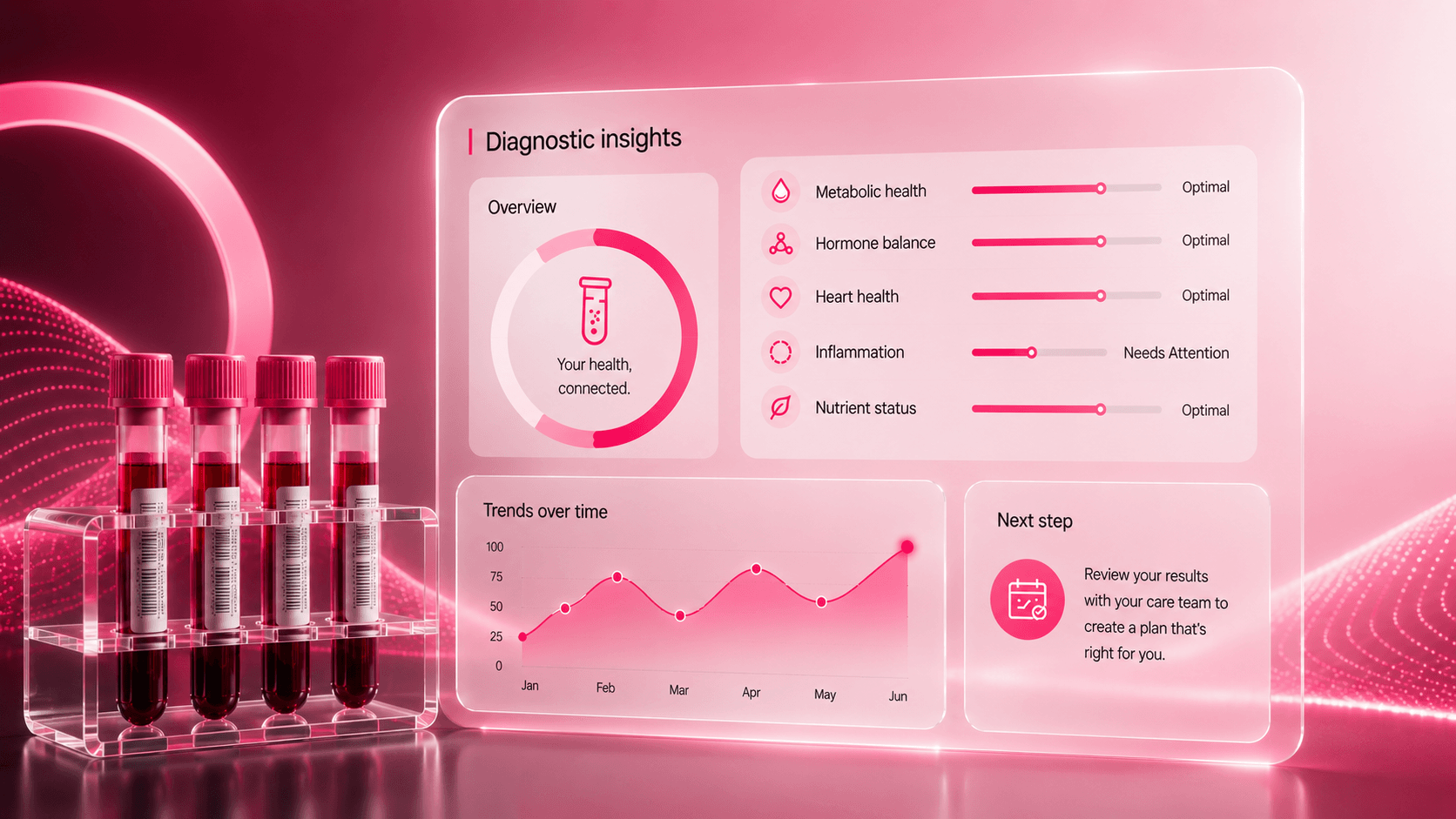
Your patients are already collecting health data—through wearables, at-home lab kits and digital health platforms. For clinics, the opportunity is to turn that growing stream of data into a more connected care experience. Diagnostics can help bridge the gap between appointments, giving you a clearer view of patient health beyond a single visit.
And diagnostics now go far beyond a single lab order. From at-home specimen collection to ongoing monitoring and integrated results, clinics have more ways to make diagnostics part of the care journey. This guide walks through eight steps for building a diagnostics program that fits seamlessly into your existing workflows.
What Is Whole-Health Diagnostic Testing?
Whole-health diagnostics takes a broader look at a patient's health rather than focusing exclusively on a single symptom or concern.
Depending on the patient, clinical context, and services your practice is equipped to support, testing may include areas such as:
Metabolic health: glucose, cholesterol, and other metabolic biomarkers
Hormone health: thyroid and other hormone-related markers
Micronutrients: vitamin D, B12, iron, and other commonly evaluated nutrients
Cardiovascular health: lipid testing and other relevant cardiovascular risk markers
Recovery and wellness: testing or monitoring that may provide additional context around sleep, recovery, and overall health
The broader movement behind this approach isn't simply about generating more health data. It's about giving patients and clinicians information that can help support more informed conversations and decisions about health.
Why Patients Are Asking for More Health Data
Demand for diagnostics is growing alongside a broader shift toward more proactive and personalized care.
According to Grand View Research, the global clinical diagnostics market was valued at $115.5 billion in 2024 and is projected to reach $169.2 billion by 2030. Growth is being driven by rising rates of chronic disease, an aging population, greater demand for personalized medicine, and increased patient awareness around disease diagnosis.
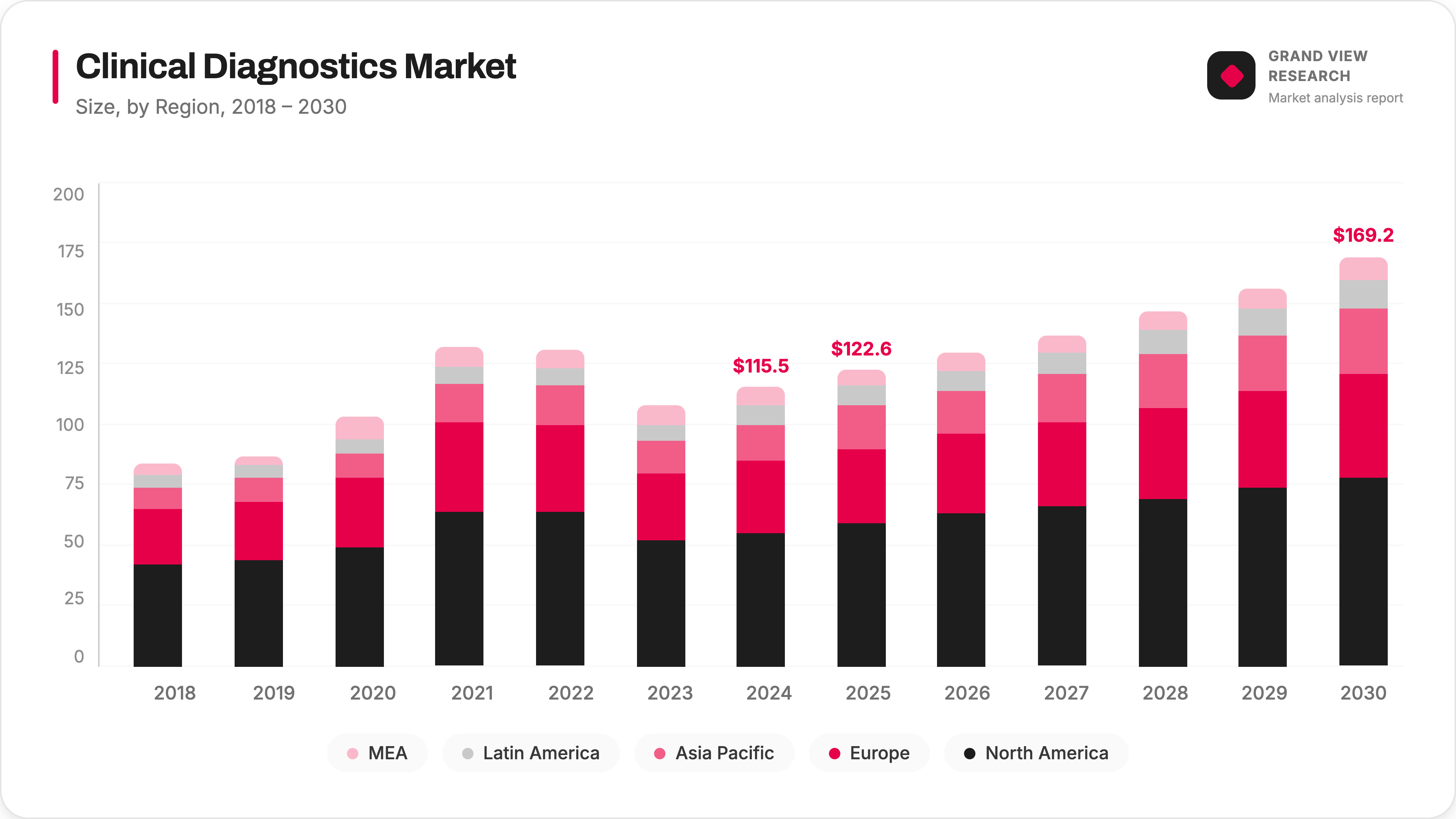
For clinics, the takeaway is straightforward: patients increasingly want more information about their health and more convenient ways to access it.
Where Diagnostics Fits Into the Care You Already Provide
Adding diagnostics doesn't necessarily mean creating an entirely separate business within your practice.
In many cases, testing can strengthen services you already offer by giving clinicians and patients another source of information for care planning and follow-up.
Diagnostics can help support:
Establishing baseline health information
Identifying areas that may warrant further clinical evaluation
Informing appropriate nutrition or lifestyle recommendations
Monitoring changes over time
Supporting ongoing wellness or clinical programs
Creating clearer opportunities for follow-up care
This is where diagnostics can become particularly valuable.
Instead of ending the patient journey after an appointment, testing can create another meaningful touchpoint between the patient and their care team.
Common Types of Diagnostic Panels
Several categories commonly appear in broader wellness and diagnostic programs.
Comprehensive Metabolic Testing
Testing may include markers such as glucose, HbA1c, fasting insulin, and other measures related to metabolic function.
Hormone and Thyroid Testing
Depending on clinical appropriateness, panels may evaluate markers such as TSH, cortisol, and sex hormones.
Consumers are already exploring many of these tests independently. Our guide to at-home kits for hormone testing provides a closer look at the consumer options for testing.
Cardiovascular and Inflammation Markers
These panels may include lipids, hsCRP, and other markers clinicians can use when evaluating cardiovascular or inflammatory risk.
General Wellness Testing
Depending on the program, clinics may also consider testing biomarkers such as vitamin D and B12 alongside other general wellness markers.
Additional Screening
STI testing, urinalysis, and other screening services may also be appropriate depending on the population you serve and the clinical structure of your program.
What Patients Expect From Diagnostic Testing
Patients don't just want access to more health data. They want an experience that makes that information easy to access, understand, and act on.
That starts with making the testing process simple from beginning to end. Patients increasingly expect:
Convenient options for completing their tests
Clear instructions on how to prepare and what to expect
Predictable turnaround times
Easy access to their test results
Test results explained in terms they can understand
Clear guidance on potential next steps and follow-up care
Giving patients more health data isn't necessarily helpful if they're left trying to interpret a lab report on their own.
A connected diagnostics experience closes that gap by giving patients a clearer path from testing → results → understanding → next steps.
How to Add Diagnostics to Your Clinic in 8 Steps
1. Identify What Your Patients Actually Need
Start with the needs of your patient population.
Review:
Common patient questions
Existing services and care pathways
Gaps in your current offerings
Areas where additional health data could support care decisions
Opportunities for appropriate follow-up or monitoring
This exercise should help you identify the purpose of your diagnostics program before you select which tests to offer.
A clinic looking to support metabolic health may need a very different testing strategy than one focused on hormones, preventive wellness, or cardiovascular risk.
Start with the problem you're trying to solve. Build the testing menu around it.
2. Choose the Right Diagnostic Panels
Once you've defined the program's purpose, determine which tests support it. Depending on your patient population and care model, there are several health diagnostics you may want to consider, including:
Thyroid Function Testing
Respiratory Diagnostics
Cardiac Diagnostics
Hormone Panels
Sleep Diagnostics
Metabolic Panels
Mental Health Diagnostics
Comprehensive Lab Panels
Rather than treating each diagnostic as a standalone test, consider how they work together to support more complete care pathways.
A comprehensive panel can reveal connections across a patient’s health, helping clinicians identify needs earlier and turn those insights into more coordinated, ongoing care.
3. Decide How Patients Will Access Testing
Next, determine how specimens will be collected.
Options may include:
National laboratory patient center locations
At-home collection kits
Mobile phlebotomy
In-clinic collection
Your model may use more than one option.
When evaluating each approach, consider convenience, geographic availability, cost, specimen requirements, patient preferences, and the operational impact on your staff.
The best collection strategy is one that fits naturally into the patient journey without creating unnecessary friction for patients or your team.
4. Build the Clinical Protocols Behind the Tests
Ordering the test is only one part of the program.
Before launch, define what happens before and after that order.
Your protocols should address areas such as:
Patient eligibility
Test-selection criteria
Ordering workflows
Test result review
Abnormal test result escalation
Follow-up recommendations
Retesting intervals
Documentation requirements
Standardization matters because it helps your team deliver a more consistent experience as testing volume grows.
Instead of treating every lab order as a one-off event, build a repeatable pathway your clinicians and staff can follow.
5. Establish Provider Oversight and Clinical Support
Diagnostics is a clinical service, which means clinical oversight needs to be part of the infrastructure from the beginning.
Determine:
Who has authority to order testing
Who reviews test results
How abnormal findings are escalated
Which licensure requirements apply
How patient consent is documented
How health information is stored and transmitted
How test results and follow-up communications are documented
If your program reaches patients across multiple states, state-specific licensure and clinical requirements may add another layer of complexity.
Technology matters here, too. Diagnostic workflows may involve protected health information, making secure data handling and HIPAA-aligned systems essential.
6. Design the Complete Patient Journey
Now map the experience from the patient's perspective.
A typical pathway might look like:
Intake → Test recommendation → Lab order → Specimen collection → Results → Clinician review → Next step → Follow-up or retesting
Look for friction at every stage. Ask yourself:
Can patients easily understand which test they need?
Do they know where to go?
Can they access their test results easily?
Will someone explain what those test results mean?
Do they know what happens next?
Strong diagnostics programs don't leave those questions unanswered.
Your patient experience should connect every step into one clear journey.
7. Connect Test Results to Actionable Care
A lab result shouldn't be the end of the experience.
Diagnostics can help uncover opportunities for more personalized care based on a patient's results, goals, and clinical needs. Appropriate next steps could include:
Nutrition or lifestyle interventions
Ongoing wellness support
Clinician follow-up
Additional testing or monitoring
Medication when clinically appropriate
Referral to another provider or specialist
Enrollment in a more comprehensive or personalized care program
The specific path will differ from patient to patient — what's important is having a clear process for turning diagnostic insights into relevant next steps and ongoing care.
8. Launch, Measure, and Expand
You don't need to launch every possible panel on day one.
Start with a focused program, measure how it performs, and expand based on operational data.
Consider tracking:
Relevant clinical outcomes
Test utilization
Patient engagement
Test completion rates
Follow-up rates
Operational efficiency
These metrics can show where the patient journey is working and where additional support may be needed.
As demand grows, you can evaluate additional panels, specimen collection methods, and other complementary services.
Build vs. Buy: Choosing Your Diagnostics Infrastructure
Once you've mapped your diagnostics program, there's another important decision to make:
How much of the infrastructure will you build internally?
The right choice depends on your existing clinical resources, technology, operational capacity, and plans for growth.
Building In-House Requires
Lab partnerships and logistics
Clinician coverage
HIPAA-compliant infrastructure
State-by-state regulatory management
White-Label Infrastructure Allows You To
Launch under your own brand
Access nationwide lab networks
Offer at-home and in person specimen collections
Integrate clinician interpretation
Scale volume without adding headcount
For most businesses, white-labeling is faster, safer, and more scalable.
Ready to Add Diagnostics Without the Build-Out?
OpenLoop® is the leading white-label digital health infrastructure provider. You control the brand, we power everything behind the scenes.
With OpenLoop, you can offer diagnostic testing for your clinic with access to:
Nationwide lab networks and pre-built logistics
Licensed clinician network for interpretation and follow-up
HIPAA-compliant technology and workflows
24/7/365 patient support
Seamless EHR and platform integrations
Trusted by millions of patients annually and powering hundreds of thousands of visits per month, OpenLoop helps brands launch whole-health programs that scale.
Ready to launch your diagnostics program? Contact us today!
This content is intended for general informational purposes only and should not be construed as legal advice. For guidance on your specific situation, please consult a licensed attorney.